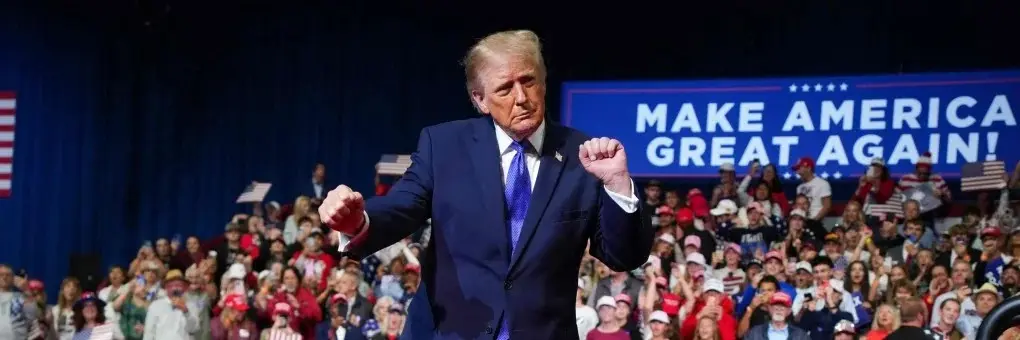
Today starts one of the most important elections
yunus
The upcoming U.S. midterm elections are widely considered by political analysts to be among the most consequential in recent American history. Falling at the midpoint of the current presidential term, the vote serves as a direct referendum on the administration's agenda, with the balance of congressional power hanging on razor-thin majorities. Depending on which party secures the House and Senate, U.S. domestic laws, foreign alliances, and active military involvements could experience drastic shifts.
The future of American governance hinges on three primary scenarios outlined by political forecasters:
Scenario 1: The Democratic Sweep
A sweep of both chambers by the Democratic Party would trigger an immediate era of aggressive executive oversight and legislative resistance.
Scenario 2: The Divided Congress
The future of American governance hinges on three primary scenarios outlined by political forecasters:
Scenario 1: The Democratic Sweep
A sweep of both chambers by the Democratic Party would trigger an immediate era of aggressive executive oversight and legislative resistance.
- Impeachment and Oversight: With committee gavels in hand, Democrats would launch sweeping investigations into executive branch conduct, use subpoena powers to demand internal documents, and potentially initiate formal impeachment proceedings against the President or high-ranking cabinet officials.
- Foreign Policy and Wars: A Democratic Congress could use the power of the purse to place strict conditions on military spending. This could lead to a reassessment of funding for ongoing foreign conflicts, potentially forcing the administration to seek diplomatic resolutions rather than prolonged military engagements.
- Domestic Policy: Key administration initiatives, including further tax cuts and deregulatory pushes, would be dead on arrival. Congress would instead focus on passing legislation to protect voting rights and climate regulations, setting up a cycle of presidential vetoes.
If the election yields a split result - such as Democrats taking the House while Republicans retain the Senate - Washington will likely enter a state of severe legislative gridlock.
- Judicial Confirmations: A Republican-controlled Senate would ensure the President can continue appointing federal judges and cabinet officials with minimal friction.
- Legislative Bottleneck: Major domestic policy overhauls would stall completely. Budget battles would become highly contentious, increasing the risk of government shutdowns as both parties use government funding as leverage.
- Foreign Policy Continuity: Because the executive branch retains broad constitutional authority over foreign affairs and the Senate handles treaty ratifications, the administration's broader foreign policy and military stances would remain largely uninterrupted, even if the House restricts funding for specific programs.
Scenario 3: The Republican Retain
If the Republican Party defies public polling to maintain control of both the House and the Senate, the administration will secure a renewed electoral mandate.
- Domestic Policy Acceleration: A unified government would allow the swift passage of second-term domestic priorities, including the permanent extension of expiring tax cuts, stricter border enforcement measures, and further reductions in federal agency oversight.
- Foreign Policy and Global Conflicts: The administration would operate with minimal domestic resistance to its foreign policy. This would allow the executive branch to aggressively pursue its international strategy, whether that involves scaling up operations in active war zones or executing rapid shifts in foreign aid allocations without congressional interference.