UN Vote Froze Africa’s Last Colony
yunus
For five decades, a desert territory the size of Colorado has hung in geopolitical limbo. Caught between competing empires, regional rivalries, and an indigenous population demanding self-determination, Western Sahara is often called Africa’s last colony. A complete collapse of its United Nations peacekeeping mandate has just thrust this forgotten conflict back into the spotlight.
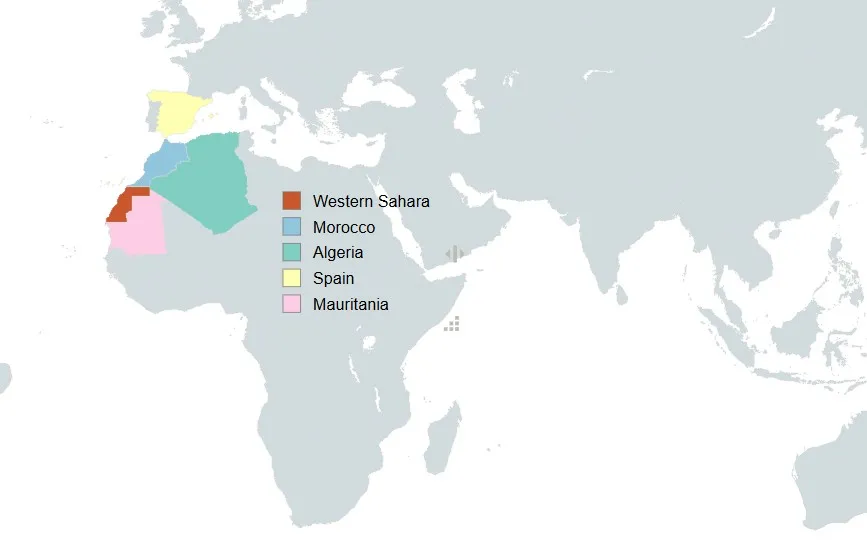
The struggle began in 1884 when Spain colonized the resource-rich strip of land along the Atlantic coast. By 1975, facing domestic chaos and intense pressure to decolonize, Spain abruptly withdrew. Instead of gaining independence, the native Sahrawi people watched their homeland get carved up by their neighbors.
Refusing to trade one colonial master for another, the Sahrawis organized as the Polisario Front and fought a fierce guerrilla war. Mauritania withdrew in 1979, but Morocco annexed the remaining territory and built a 1,700-mile defensive sand wall, splitting the land. Today, Morocco controls 80 percent of Western Sahara, including its lucrative phosphate mines and rich fishing waters.
This became the ultimate proxy war of North Africa. Morocco’s rival, Algeria, heavily backs the Polisario Front with weapons and funds, seeking a geopolitical ally to block Moroccan expansion and secure Atlantic Ocean access. Algeria also hosts over 100,000 Sahrawi refugees who have languished in harsh desert displacement camps for generations.
For 35 years, the referendum stalled over voter eligibility. Morocco insisted that Moroccan settlers who moved in after 1975 should vote, while the Polisario Front argued only original Sahrawis should be counted.
Morocco claimed historical right to the territory, launching the "Green March" - sending 350,000 unarmed Moroccan civilians across the border to claim the land. Spain hastily signed the Madrid Accords, transferring control to Morocco and Mauritania.
Refusing to trade one colonial master for another, the Sahrawis organized as the Polisario Front and fought a fierce guerrilla war. Mauritania withdrew in 1979, but Morocco annexed the remaining territory and built a 1,700-mile defensive sand wall, splitting the land. Today, Morocco controls 80 percent of Western Sahara, including its lucrative phosphate mines and rich fishing waters.
This became the ultimate proxy war of North Africa. Morocco’s rival, Algeria, heavily backs the Polisario Front with weapons and funds, seeking a geopolitical ally to block Moroccan expansion and secure Atlantic Ocean access. Algeria also hosts over 100,000 Sahrawi refugees who have languished in harsh desert displacement camps for generations.
In 1991, the UN brokered a ceasefire and created a peacekeeping mission, MINURSO, explicitly tasked with organizing a referendum. The Sahrawi people were promised a vote on independence. But that vote was never allowed to happen.
For 35 years, the referendum stalled over voter eligibility. Morocco insisted that Moroccan settlers who moved in after 1975 should vote, while the Polisario Front argued only original Sahrawis should be counted.
Donald Trump's quid pro quo deal
Frustrated by the stalemate, diplomacy took a radical turn in December 2020. President Donald Trump brokered a quid pro quo deal: Morocco fully normalized diplomatic relations with Israel, and in exchange, the United States became the first superpower to officially recognize Morocco's sovereignty over Western Sahara. This shift paved the way for major European powers to back Morocco’s 2007 Autonomy Plan, which offers self-governance but keeps the region under Moroccan rule.
This culminated in a breaking point at the UN Security Council. The U.S. drafted a resolution to drop the word "Referendum" from the UN mission entirely, cementing Morocco’s autonomy plan as the only solution. Russia retaliated with a veto, leading to a chain of counter-vetoes.
The resulting diplomatic deadlock caused the peacekeeping mandate to officially expire. With the promise of a referendum erased and the UN buffer gone, Western Sahara sits at its most dangerous crossroads in decades.