Mathematicians Reconsider Career as AI Floods Academia
yunus
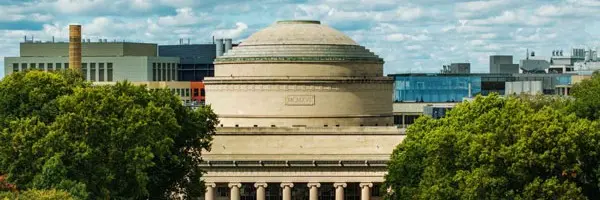
A groundbreaking new study out of the Massachusetts Institute of Technology (MIT) reveals that a vast majority of graduate students and postdoctoral scholars are actively reconsidering their careers in response to the dizzying acceleration of artificial intelligence.
For generations, the path of a mathematician was driven by the pursuit of singular, human breakthrough - the creative spark required to solve centuries-old puzzles. Today, that spark is being challenged by brute-force computation. According to the MIT survey, nearly 70 percent of junior researchers report that AI has significantly dampened their motivation and clouded their professional futures.
The anxiety is not just about the availability of work, but the very nature of it. Academic job markets, already notorious for intense competition and scarce tenured openings, are becoming even tighter as universities grapple with the integration of machine learning tools. More profoundly, young academics express fear that their roles are transforming from creative visionaries into technical custodians. Instead of formulating original theorems, many worry their futures will be spent auditing endless, automated log files to verify machine-generated data.
This shift comes on the heels of what some insiders are calling a "math apocalypse." The mathematics community has recently been inundated with hundreds of AI-generated papers and automated proofs - including a massive single release of 722 research papers by OpenAI. This tidal wave of automated content has shifted a massive, uncompensated burden onto human peers, who must meticulously check the computer logic for errors.
Yet, senior figures in the field urge against total despair. While junior researchers bear the brunt of the immediate disruption, prominent leaders - including Fields Medalist Terence Tao - suggest that the human element of mathematics is evolving rather than disappearing. Industry guidelines, such as the newly drafted Leiden Declaration on Artificial Intelligence and Mathematics, stress that while computers excel at checking steps and calculating at scale, they lack the conceptual intuition required to ask the right questions.
For the next generation of scholars, the challenge will be adapting to this new reality: learning to co-author with the machine, directing the narrative of mathematical discovery, and finding meaning in a world where the heavy lifting is done by algorithms.