The Domestic Cost of Europe's Foreign Policy
yunus
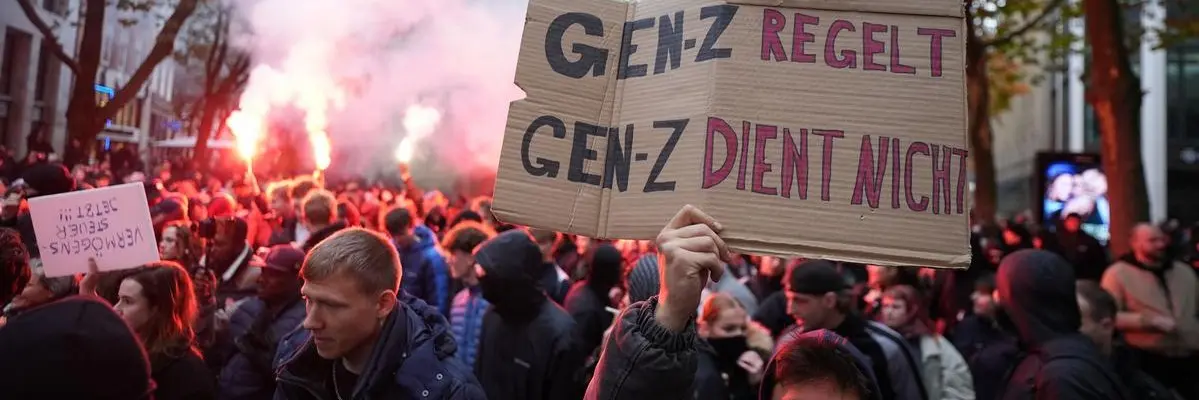
The smoke clearing from the streets of Paris and Frankfurt this weekend carries a sharp political warning. Over the Halloween weekend of 2026, hundreds of thousands of Gen Z youth led an explosive wave of unrest across 34 German cities and nationwide in France. In Germany, peaceful student marches disintegrated into night riots, barricades, and the looting of luxury stores in Frankfurt. In France, over 320,000 protesters defied strict city bans, battling police with fireworks near the Eiffel Tower, leaving hundreds arrested and officers severely burned.
While triggered by local grievances - crumbling school infrastructure, soaring rents, and impending student blockades - this sudden domestic revolt is the direct symptom of a backfiring European foreign policy.
For years, Berlin and Paris have prioritized a high-stakes, outward-facing strategy: tying their economies tightly to Washington and funneling billions into massive rearmament programs. Today, the hidden domestic costs of that global posture have broken the social contract at home. First, the soaring cost of living is directly linked to external conflicts, notably the February 2026 U.S.–Israeli escalation against Iran, which choked the Strait of Hormuz and sent European energy prices soaring.
For years, Berlin and Paris have prioritized a high-stakes, outward-facing strategy: tying their economies tightly to Washington and funneling billions into massive rearmament programs. Today, the hidden domestic costs of that global posture have broken the social contract at home. First, the soaring cost of living is directly linked to external conflicts, notably the February 2026 U.S.–Israeli escalation against Iran, which choked the Strait of Hormuz and sent European energy prices soaring.
Second, the fiscal pivot toward military hard power has come at the direct expense of domestic welfare. German youth are explicitly rioting against state funds being diverted into defense alongside the looming threat of compulsory military conscription. In France, burdened by a public debt where interest payments alone outpace the entire defense budget, the state continues to heavily fund its global military posture while starvation-budgeting public education.
As Europe's centrist leaders struggle to contain the fires, foreign adversaries are gleefully exploiting the chaos. Russian state-backed disinformation networks like "Doppelgänger" are aggressively weaponizing viral TikToks, driving home a simple, lethal narrative to angry youth: “Every euro sent away is a euro stolen from your future.” By trying to project power on the global chessboard without securing the economic well-being of the base at home, European leaders have turned their own streets into their greatest geopolitical vulnerability.
As Europe's centrist leaders struggle to contain the fires, foreign adversaries are gleefully exploiting the chaos. Russian state-backed disinformation networks like "Doppelgänger" are aggressively weaponizing viral TikToks, driving home a simple, lethal narrative to angry youth: “Every euro sent away is a euro stolen from your future.” By trying to project power on the global chessboard without securing the economic well-being of the base at home, European leaders have turned their own streets into their greatest geopolitical vulnerability.