U.S. Congress: The Engine of Washington
yunus
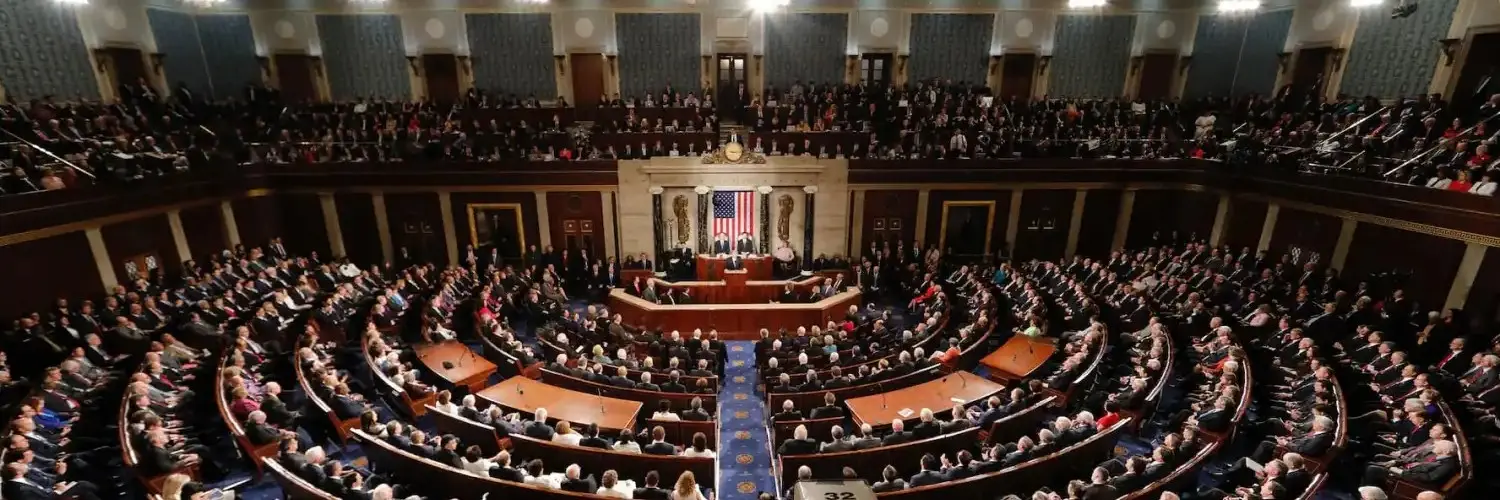
The United States Congress is the legislative branch of the federal government. Its job is to write laws, control government spending, and monitor the executive branch.
To understand how it functions, you have to look at its split structure, its massive support network, and the built-in hurdles that make lawmaking a slow, high-friction process.
The Two Halves of Congress Congress is bicameral, meaning it is split into two distinct chambers. They must both agree on a bill before it can become law, but they operate under completely different rules.
The House of Representatives (The Sprint)
- Total Members: 435 lawmakers, distributed by state population. Big states get more representatives; small states get fewer.
- Terms: Just 2 years. All 435 members face election at the same time every even-numbered year.
- Culture: Highly sensitive to public mood. Because they are always campaigning, the House moves fast and operates by strict majority rule.
The Senate (The Marathon)
- Total Members: 100 lawmakers. Every state gets exactly 2 Senators, regardless of size.
- Terms: 6 years. Senate elections are staggered so that only one-third of the seats are up for election every two years.
- Culture: Designed to be a deliberate, cooling chamber. It operates on consensus, and rules like the filibuster mean you practically need 60 out of 100 votes to pass most major bills.
How Vacancies are Filled
The chambers also differ when a lawmaker leaves office unexpectedly:
The chambers also differ when a lawmaker leaves office unexpectedly:
- House seats can never be appointed; state governors must call a special election so the people can vote.
- Senate seats can usually be temporarily filled by a governor's appointment until the next election cycle occurs.
The 17,000-Person Engine
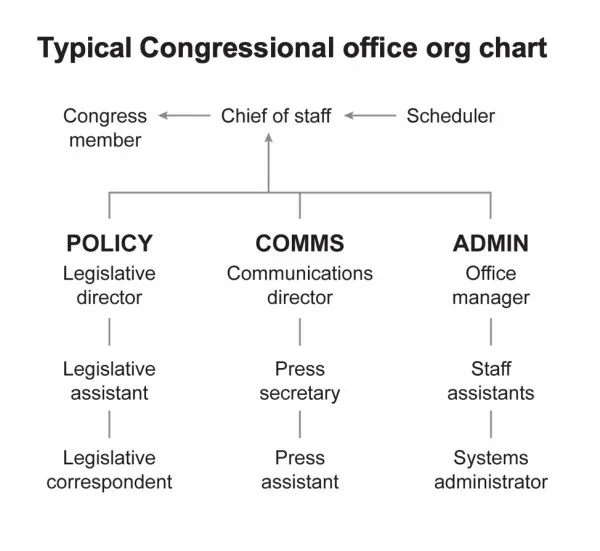
While 535 elected politicians cast the votes, a massive workforce of over 17,000 staffers drives daily operations.
While 535 elected politicians cast the votes, a massive workforce of over 17,000 staffers drives daily operations.
- Personal Staff: Based in D.C. and local districts. They handle constituent casework - helping citizens sort out issues with federal agencies like immigration, passports, or veterans' benefits.
- Committee Staff: Policy experts, lawyers, and researchers who work exclusively for specific congressional committees.
- Support Agencies: Nonpartisan institutions like the Congressional Budget Office (CBO) and the Government Accountability Office (GAO) that analyze data, audit spending, and provide objective reports.
The Legislative Gauntlet
Writing a law is an elimination game. Out of roughly 10,000 bills introduced every two years, only a few hundred pass. The process relies on two major filters:
- Committees (The Gatekeepers): Bills are first sent to specialized committees (e.g., Finance, Judiciary). If the committee chair doesn't grant the bill a hearing, it dies quietly. Most bills never make it out of committee.
- The Floor: If a bill survives committee, it goes to the full chamber floor for debate and a vote. It must pass both the House and the Senate in the exact same format before heading to the President's desk to be signed into law or vetoed.
What a Typical Day Looks Like
Despite the large staff, a massive portion of the workload isn't just writing brand-new laws from scratch. Daily operations divide into several heavy categories:
- Constituent Services ("Casework"): Thousands of staffers spend their days acting as a liaison between everyday people and the federal government—fixing delayed passports, military benefits, or retirement checks.
- Policy & Bill Research: Legislative assistants and counsels read through massive, complex bills (sometimes hundreds of pages long), attend briefings, write speeches, and meet with industry, trade, or citizen groups.
- Committee Hearings: Committee staff prepare lawmakers for intense questioning sessions, hearings with cabinet secretaries, or investigations into government programs.
- Communications & Press: Press secretaries and communication directors field media requests, issue statements, manage social media, and answer mountains of mail and emails from the public.
Is There "Huge Work" Every Day?
Yes, the building operates at a high-intensity pace, though the nature of the work shifts depending on the calendar:
- When Congress is in session: Lawmakers and senior aides routinely work 50- to 70-hour weeks jammed with committee markups, floor votes, and back-to-back meetings.
- When lawmakers are back home ("District/State Work Periods"): Staffers pivot heavily to local town halls, constituent outreach, and local project tracking.
- The "Bottleneck" Reality: Even with thousands of staffers, passing laws is intentionally slow and friction-heavy by constitutional design (requiring agreement across two distinct chambers, committee hurdles, and often a 60-vote threshold or the threat of a filibuster in the Senate). Consequently, out of thousands of bills introduced each session, only a small fraction ultimately cross the finish line.
The Gang of Eight
While standard lawmaking involves all 535 members, the ultimate peak of legislative power belongs to a select group of lawmakers known as the "Gang of Eight."
By law, the President is required to keep Congress informed of secret intelligence operations and covert actions.
However, when a crisis or national security risk is too sensitive to share with all lawmakers, the executive branch briefs only these eight people:
- The leadership: The Speaker of the House and the House Minority Leader.
- The Senate leadership: The Senate Majority Leader and the Senate Minority Leader.
- The intelligence chairs: The chairs and ranking members of both the House and Senate Intelligence Committees.
This group represents the highest level of congressional oversight. They are often briefed on classified operations, cyber warfare, and highly sensitive military developments before anyone else in the capital. Because of this access, they wield immense, quiet influence over the country's most critical foreign policy and defense decisions.
The Ultimate Lever: The Power of the Purse
If the Gang of Eight represents the muscle of congressional oversight, the "Power of the Purse" is its backbone.
Under the U.S. Constitution, the executive branch - including the President and the military - cannot spend a single dollar of public money unless Congress explicitly passes a law to authorize it. This gives the legislative branch immense leverage over the White House.
Under the U.S. Constitution, the executive branch - including the President and the military - cannot spend a single dollar of public money unless Congress explicitly passes a law to authorize it. This gives the legislative branch immense leverage over the White House.
The Reality of Divided Government:
When this happens, the dynamic changes entirely:
- When the President’s political party controls both the House and the Senate, lawmaking can move relatively smoothly. However, the American system frequently results in a divided government where the opposing party wins control of one or both chambers of Congress.
When this happens, the dynamic changes entirely:
- The Budget Weapon: Congress can use mandatory government funding bills to block the President's agenda or force policy concessions by threatening to withhold funds.
- The Veto Check: While Congress holds the money, the President holds the veto. If the President rejects a bill, Congress must rally a two-thirds majority in both chambers to override the veto - a massive hurdle that keeps both sides locked in constant negotiation.
- Subpoenas and Investigations: Controlling the majority means controlling committees. The opposing party can use this power to launch aggressive investigations into the administration, summon cabinet officials to testify, and aggressively police federal spending.